Why Production Data Centralization Matters for Industrial Digital Transformation
@productiondataview
For years, industrial plants have operated with data scattered across dozens of isolated systems. SCADA systems, PLCs, historians, and edge devices each hold a piece of the puzzle, but pulling those pieces together into one coherent view has been a persistent challenge. As factories push toward smarter operations, the need for production data centralization becomes more than a technical convenience. It becomes the foundation for real-time decision-making, predictive maintenance, and true digital transformation.
I have spent the better part of a decade working with manufacturing teams that struggle with data silos. The pattern is always the same: a plant manager wants to reduce downtime, so the engineering team buys a new analytics tool. That tool connects to one source, maybe the historian, but ignores the vibration sensors on the conveyor belt or the temperature data from the furnace controller. The result is a partial picture, and partial pictures lead to incomplete decisions. Production data centralization solves that by creating a single, unified view of all operational data, regardless of where it originates.
What Production Data Centralization Actually Means
At its simplest, production data centralization means bringing data from all parts of a manufacturing operation into one accessible, consistent environment. This includes data from operational technology (OT) like PLCs, drives, and sensors, as well as from information technology (IT) systems like ERP and MES. The goal is not just to copy data into a data lake and hope for the best. It is about making that data usable in real time, with context, so that a line operator in the control room and a data scientist in the corporate office see the same reality at the same moment.
Centralization is not the same as consolidation. You can consolidate data into a single database and still have chaos if the data is not harmonised. True centralization requires a common semantic layer, a way to describe what each data point means, what unit it uses, and where it came from. That is where the Unified Namespace becomes essential. A Unified Namespace acts as a shared dictionary for all data sources, mapping every tag, variable, and signal to a standardised name and format. Without it, centralization just moves the mess to a bigger bucket.
The Role of Architecture: Event-Driven and Stream Processing
Modern production data centralization leans heavily on event-driven architecture. Instead of polling every sensor on a fixed schedule, the system listens for events. A temperature spike, a vibration anomaly, a completed batch cycle each of these triggers a data publish event. This approach reduces network load and enables real-time responses. It also aligns well with stream processing, where data is analysed as it flows rather than after it is stored.
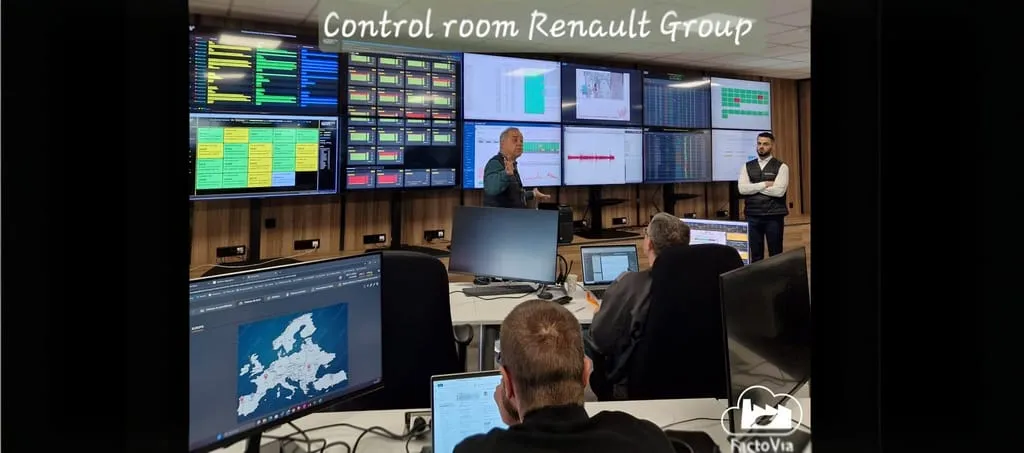
I have seen teams try to centralize production data using only batch uploads every night. By morning, the data is already stale. If a motor overheated at 2 AM, the night shift crew might have reacted, but the maintenance team does not learn about it until they see the log at 8 AM. With stream processing and an event-driven architecture, that overheating event triggers an alert in seconds, and the data is immediately available to anyone who needs it.
Enabling Technologies: OPC UA, MQTT, and Edge Computing
Several technologies make production data centralization practical at scale. OPC UA is a mature standard for industrial communication that provides secure, platform-independent data exchange. It is widely used in factory automation and works well for moving data from controllers to a central point. MQTT, on the other hand, is a lightweight publish-subscribe protocol that excels in environments with limited bandwidth or high latency. Many edge computing devices use MQTT to send telemetry data to a cloud platform.
Edge computing adds another layer. Instead of sending every raw reading to a central server, edge devices can process data locally, filter out noise, and send only meaningful events upstream. This reduces bandwidth costs and speeds up local responses. For example, a programmable logic controller on a packaging line might run a local model to detect jams and stop the line immediately, while still reporting the event to the central system for long-term analysis.
The interplay between these technologies creates a data fabric, a network of interconnected data sources that can be queried and controlled as a single entity. A data fabric is not a physical thing; it is an architectural pattern that uses APIs, message brokers, and service buses to weave data together. When combined with a Unified Namespace, it becomes a powerful tool for production data centralization.
Industrial IoT and the Cloud Platform
The rise of industrial IoT has accelerated the need for centralization. Sensors are cheaper than ever, and factories are deploying them by the hundreds. But more sensors mean more data, and more data without centralization creates noise. A well-designed cloud platform can serve as the aggregation point, storing historical data, running analytics, and serving dashboards. However, the cloud is not a magic cure. Latency, security, and cost are real concerns, especially for time-critical operations.
I worked with a food processing plant that installed IoT temperature sensors on every refrigeration unit. The data was sent to a cloud platform via MQTT, and the central team could see temperatures across three shifts. But the plant also had a local SCADA system that controlled the compressors. The SCADA system used OPC UA, and the two data streams never talked to each other. The plant manager could see the temperature in the cloud, but the SCADA system did not know about the cloud data, so it could not adjust the compressor schedule based on historical trends. Production data centralisation would have merged these streams into one consistent view, allowing the SCADA system to use both real-time and historical data for better control.

Governance and the Human Side
Technology is only half the story. Production data centralization requires strong data governance. Who owns the data? Who can see it? How long is it retained? These questions become more pressing as the volume grows. Without governance, centralization can lead to data swamps instead of data lakes. I have seen teams spend months building a central repository only to find that nobody trusts the data because no one defined who validates it.
Good governance also means managing metadata. A sensor reading is just a number until you know its context: the machine, the unit, the timestamp, the calibration date. Data mesh is an architectural concept that addresses this by treating data as a product, with clear ownership and documentation. Each data domain is managed by a dedicated team, and the central system provides a catalogue of available data products. This avoids the bottleneck of a single central team and distributes responsibility.
Real-World Example: From SCADA to Unified Namespace
Consider a factory running FactoryTalk on the plant floor for HMI and control, alongside a separate historian for trending. The maintenance team uses a different tool for vibration analysis, and the quality lab stores its results in a database. None of these systems talk to each other. To get a complete picture of a machine's health, someone has to export data from each system and manually merge it in Excel. This is fragile and slow.
By implementing a Unified Namespace, each data source publishes to a common event bus. The FactoryTalk system publishes current machine status. The vibration sensor publishes FFT data. The quality lab publishes defect rates. All of these are tagged with the same machine ID and timestamp. Now, a data scientist can build a model that correlates vibration patterns with defect rates, and the maintenance team can see real-time machine health alongside historical trends. An Azure Digital Twins model could even use this unified data to simulate the machine's behaviour under different conditions, helping predict failures before they happen.
The Trade-Offs and Judgment Calls
Centralization is not always the right answer for every data stream. Some data is ephemeral: a sensor reading that is used only for a local control loop does not need to be sent to the central system. Sending it would waste bandwidth and storage. Good architecture distinguishes between data that must be centralised and data that can stay at the edge. The judgment call depends on latency requirements, bandwidth constraints, and the value of historical analysis.
Another trade-off is between standardisation and flexibility. A rigid Unified Namespace can slow down innovation because it takes time to add new data types. A loose namespace can lead to chaos. The sweet spot is a namespace that is broad enough to cover common use cases but extensible enough to accommodate new sensor types and production processes. This requires ongoing collaboration between OT and IT teams, which is often the hardest part.

Looking Ahead: Digital Transformation, One Piece at a Time
Digital transformation in manufacturing is not a single project; it is a series of incremental improvements that build on each other. Production data centralization is one of those foundational pieces. Once you have a unified, real-time view of your production data, you can do things that were impossible before: run predictive models on line performance, optimise energy usage across multiple plants, and respond to market changes in hours instead of weeks.
The companies that succeed are the ones that treat centralization as a capability, not a project. They invest in the architecture, the governance, and the culture needed to sustain it. They use technologies like OPC UA, MQTT, and edge computing not as ends in themselves, but as tools to support a single goal: making every piece of production data available to the right person at the right time, in the right context. That is the real promise of production data centralization, and it is the foundation for everything that comes next.